192 Sloane Street, London SW1X 9QX
Easy Activities for Family Visits to a Loved One With Dementia
When visiting a loved one with dementia, the most meaningful activities are often simple, familiar, and focused on connection rather than achievement. The aim is to create positive moments together, reduce pressure on the person, and encourage conversation, comfort, and enjoyment.
At KYN, our person-centred approach to dementia care shapes every visit, and our life enrichment team is always on hand to help.
1. Looking Through Photographs
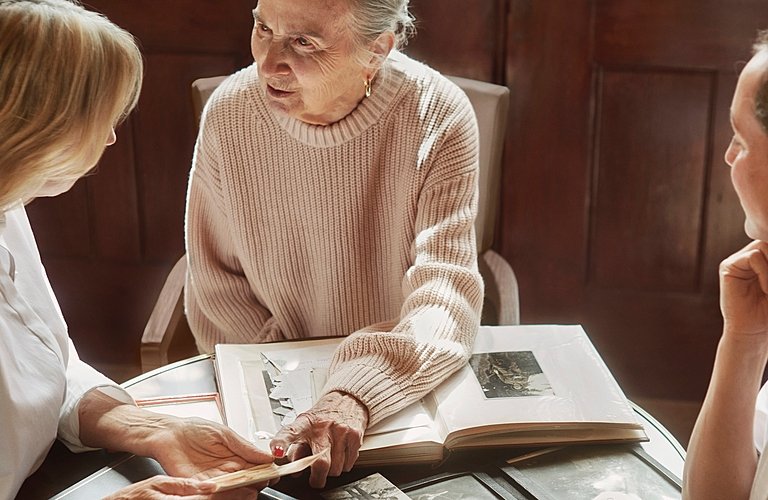
Bring family photos, holiday pictures, or a simple photo album.
How to do it:
-
For someone in the earlier stages of dementia, try to ask open questions such as "Who is this?" or "Tell me about this day". If the person is struggling, try a different approach, such as "this looks like everyone was having fun", or focus on what was happening in the photo rather than people's names. If you know the names of the people in the photos, use them to help the person living with dementia to engage.
-
If they cannot remember, simply describe the photo yourself.
-
Focus on the emotions and stories rather than testing memory.
Benefits:
-
Encourages reminiscence.
-
Supports identity and self-esteem.
-
Creates opportunities for conversation.
Listening to Favourite Music
Music is often one of the last memories to be affected by dementia.
How to do it:
-
Create a playlist of favourite songs from their younger years. If you provide the enrichment team with 15 favourite songs, we can have an MP3 player loaded with those songs for regular use. This often helps people to engage, and can help to calm and reassure them when they are becoming distressed.
-
Sing along together.
-
Gently tap hands or sway to the music.
Benefits:
-
Improves mood.
-
Reduces anxiety.
-
Encourages engagement even when communication is limited.
3. A Gentle Hand or Foot Massage
A simple sensory activity that promotes relaxation and connection.
How to do it:
-
If the person has no allergies and has a preferred cream, use a scented hand cream, otherwise use the moisturising cream they have been prescribed.
-
Massage hands or feet slowly and gently. The M Technique is a useful, gentle way to engage.
-
Talk softly while doing so.
-
Gentle background music can also help relax the person.
-
Ensure the person has a blanket or towel to cover their arms and hands after the massage, as they can often feel cold as the cream dries.
Benefits:
-
Provides comfort and reassurance.
-
Promotes relaxation.
-
Suitable for people at all stages of dementia.
4. Sharing a Cup of Tea and a Chat
Sometimes the simplest activities are the most meaningful. Try to avoid asking the person if they remember, using the phrase "I remember when we did..." instead.
Conversation ideas:
-
Favourite holidays.
-
Childhood memories.
-
Favourite foods.
-
Family traditions.
Benefits:
-
Maintains social connection.
-
Creates a sense of normality.
-
Requires no preparation.
5. Looking at Nature
Visit the garden, sit by a window, or look at pictures of nature.
How to do it:
-
Watch birds or flowers.
-
Discuss the weather and seasons.
-
Share memories of gardening or outdoor activities.
-
Planting seeds in pots, or plants into a pot or hanging basket together, can be very satisfying, and creates an opportunity for a watering activity during future visits.
Benefits:
-
Calming and relaxing.
-
Provides sensory stimulation.
-
Encourages gentle conversation.
6. Reading Together
Read a short story, magazine article, poem, or newspaper headline.
How to do it:
-
Keep content light and positive.
-
Pause regularly to discuss what you have read.
-
Do not worry if they lose track of the story.
-
Limericks are often popular, as they often incorporate humour and have a comforting rhythm.
-
Poetry can also provide comfort and interest.
-
We have a series of larger print books with short stories, so please ask the life enrichment team to use these.
Benefits:
-
Stimulates cognition.
-
Encourages interaction.
-
Can be adapted to all abilities.
7. Simple Creative Activities
No artistic skill is required. If the person does not want to engage, try something else.
Ideas:
-
Colouring books appropriate for adults.
-
Watercolour painting.
-
Making seasonal cards.
-
Decorating picture frames.
-
Painting or drawing to music can also be very relaxing and produce some interesting results.
-
Sometimes sitting and colouring while you are with your loved one can be very therapeutic. They often like to watch what you are doing, as they did when you or their children were young.
-
Looking at one or two different artworks, and discussing them with the resident. Love it or hate it, we all have a view.
Benefits:
-
Promotes self-expression.
-
Reduces stress.
-
Creates a sense of achievement.
8. Completing a Simple Puzzle
Choose activities that match the person's abilities.
Ideas:
-
Large-piece jigsaws.
-
Word searches.
-
Matching games.
-
Picture dominoes.
Benefits:
-
Encourages concentration.
-
Supports cognitive stimulation.
-
Can be completed together.
9. Sorting Activities
Many people enjoy purposeful, repetitive tasks. The enrichment team has all sorts of resources that can be used, from bead threading to sorting.
Ideas:
-
Sort buttons by colour.
-
Arrange playing cards. Solitaire or patience can be done together.
-
Match socks.
-
Organise postcards.
Benefits:
-
Provides a sense of purpose.
-
Encourages success.
-
Suitable for later stages of dementia.
10. Watching Familiar Films or TV Programmes
Choose something comforting and familiar.
Ideas:
-
Classic comedies.
-
Nature programmes.
-
Musicals.
-
Old family videos.
Benefits:
-
Sparks memories.
-
Encourages conversation.
-
Can be enjoyed without pressure to participate.
11. Looking Through a Memory Box
Create a box containing meaningful items.
Examples:
-
Old photographs.
-
Souvenirs.
-
Medals.
-
Recipe cards.
-
Postcards.
Benefits:
-
Encourages reminiscence.
-
Supports identity.
-
Creates opportunities for storytelling.
12. Simple Movement Activities
Gentle movement can improve wellbeing.
Ideas:
-
Chair-based exercises.
-
Stretching arms and legs.
-
Throwing and catching a soft ball.
-
Dancing to favourite music.
-
Batting a balloon.
Benefits:
-
Encourages physical activity.
-
Improves mood.
-
Supports mobility.
Useful Tips for Family Members
-
Focus on enjoyment, not memory.
-
Follow the person's interests and energy levels.
-
Keep activities short and flexible.
-
Avoid correcting mistakes.
-
Celebrate participation rather than outcomes.
-
Be guided by the person's mood on the day.
-
Remember that sitting quietly together can be just as meaningful as doing an activity.
Activities That Need No Equipment
-
Holding hands and chatting.
-
Looking out of the window together.
-
Singing favourite songs.
-
Telling family stories.
-
Saying prayers or spiritual reflections.
-
Reading poetry aloud.
-
Laughing over old memories.
-
Sharing a snack or drink.
Why Connection Matters Most on a Visit
The best visits are often those where family members focus on connection, comfort, and companionship rather than trying to keep their loved one occupied. Even a few minutes of meaningful engagement can have a positive impact on both the person living with dementia and their family.
To find out more about life at KYN Hurlingham and KYN Bickley, or to arrange a private tour, please enquire today.


